

Applied Intuition: Physical AI is the Future

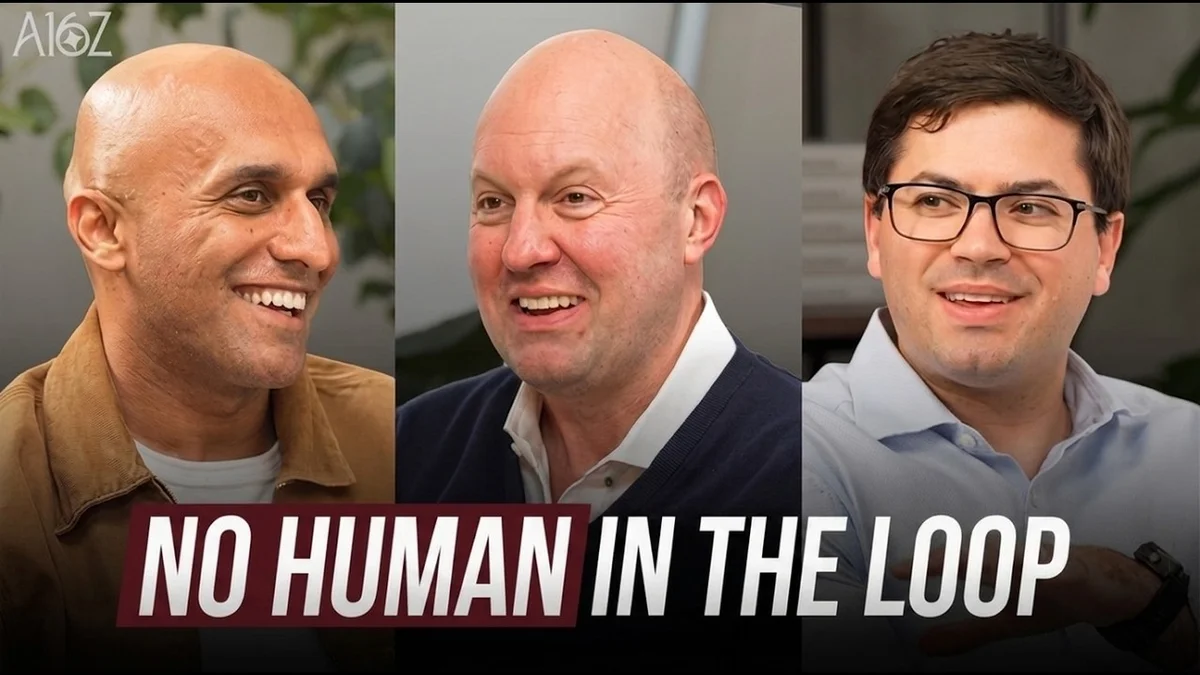
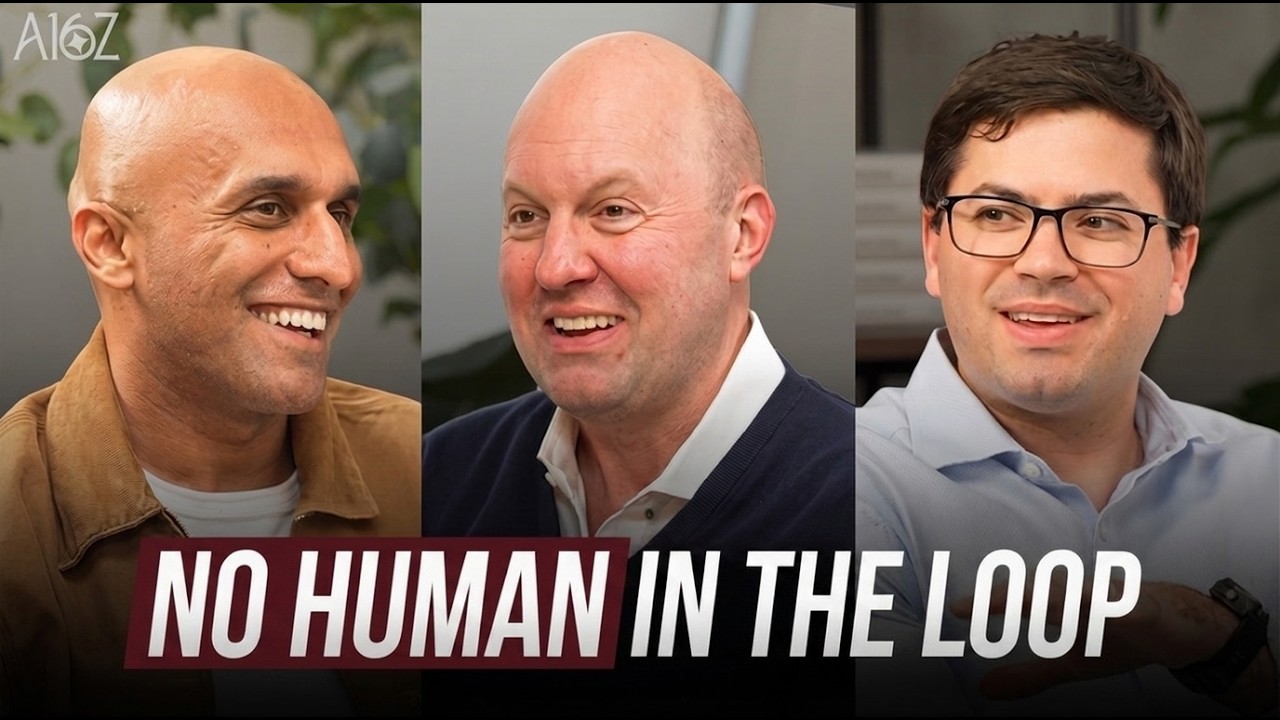
Applied Intuition CEO Qasar Younis joins a16z's Marc Andreessen to discuss the future of 'physical AI,' its impact on the global economy, and the company's new platform, Dana.

9 min read
Qasar Younis speaking on a panel about physical AI
Qasar Younis, Co-founder and CEO of Applied Intuition, discusses the future of physical AI.· a16z

Visual TL;DR. Physical AI contrasts with Digital AI vs. Physical. Physical AI drives Applied Intuition Mission. Applied Intuition Mission involves Evolving Strategy. Evolving Strategy includes Dana Platform. Applied Intuition Mission aims for Billion Machines. Billion Machines leads to Future Impact.

  1. Physical AI: intelligence in moving physical entities like cars, trucks, tanks, and drones
  2. Digital AI vs. Physical: digital AI is software, ad optimization; physical AI impacts the real world
  3. Applied Intuition Mission: imbue a billion machines with intelligence, profoundly impacting society
  4. Evolving Strategy: from creating tools for intelligence to developing the intelligence itself
  5. Dana Platform: Applied Intuition's new platform for future AI development
  6. Future Impact: companies impacting the physical world might eclipse digital-focused ones
  7. Billion Machines: making a billion machines intelligent will profoundly impact society
Visual TL;DR
Visual TL;DR, startuphub.ai Physical AI drives Applied Intuition Mission. Applied Intuition Mission aims for Billion Machines. Billion Machines leads to Future Impact drives aims for leads to Physical AI Applied Intuition Mission Future Impact Billion Machines From startuphub.ai · The publishers behind this format
Visual TL;DR, startuphub.ai Physical AI drives Applied Intuition Mission. Applied Intuition Mission aims for Billion Machines. Billion Machines leads to Future Impact drives aims for leads to Physical AI Applied IntuitionMission Future Impact Billion Machines From startuphub.ai · The publishers behind this format
Visual TL;DR, startuphub.ai Physical AI drives Applied Intuition Mission. Applied Intuition Mission aims for Billion Machines. Billion Machines leads to Future Impact drives aims for leads to Physical AI intelligence in moving physical entitieslike cars, trucks, tanks, and drones Applied Intuition Mission imbue a billion machines withintelligence, profoundly impacting society Future Impact companies impacting the physical worldmight eclipse digital-focused ones Billion Machines making a billion machines intelligent willprofoundly impact society From startuphub.ai · The publishers behind this format
Visual TL;DR, startuphub.ai Physical AI drives Applied Intuition Mission. Applied Intuition Mission aims for Billion Machines. Billion Machines leads to Future Impact drives aims for leads to Physical AI intelligence inmoving physicalentities like cars,… Applied IntuitionMission imbue a billionmachines withintelligence,… Future Impact companies impactingthe physical worldmight eclipse… Billion Machines making a billionmachinesintelligent will… From startuphub.ai · The publishers behind this format
Visual TL;DR, startuphub.ai Physical AI contrasts with Digital AI vs. Physical. Physical AI drives Applied Intuition Mission. Applied Intuition Mission involves Evolving Strategy. Evolving Strategy includes Dana Platform. Applied Intuition Mission aims for Billion Machines. Billion Machines leads to Future Impact contrasts with drives involves includes aims for leads to Physical AI intelligence in moving physical entitieslike cars, trucks, tanks, and drones Digital AI vs. Physical digital AI is software, ad optimization;physical AI impacts the real world Applied Intuition Mission imbue a billion machines withintelligence, profoundly impacting society Evolving Strategy from creating tools for intelligence todeveloping the intelligence itself Dana Platform Applied Intuition's new platform forfuture AI development Future Impact companies impacting the physical worldmight eclipse digital-focused ones Billion Machines making a billion machines intelligent willprofoundly impact society From startuphub.ai · The publishers behind this format
Visual TL;DR, startuphub.ai Physical AI contrasts with Digital AI vs. Physical. Physical AI drives Applied Intuition Mission. Applied Intuition Mission involves Evolving Strategy. Evolving Strategy includes Dana Platform. Applied Intuition Mission aims for Billion Machines. Billion Machines leads to Future Impact contrasts with drives involves includes aims for leads to Physical AI intelligence inmoving physicalentities like cars,… Digital AI vs.Physical digital AI issoftware, adoptimization;… Applied IntuitionMission imbue a billionmachines withintelligence,… Evolving Strategy from creating toolsfor intelligence todeveloping the… Dana Platform Applied Intuition'snew platform forfuture AI… Future Impact companies impactingthe physical worldmight eclipse… Billion Machines making a billionmachinesintelligent will… From startuphub.ai · The publishers behind this format

Qasar Younis, CEO of Applied Intuition, joined Marc Andreessen on The a16z Show to discuss the burgeoning field of "physical AI." Younis articulated the company's mission: to imbue a billion machines with intelligence, believing this will profoundly impact society.

Applied Intuition: Physical AI is the Future - a16z
Applied Intuition: Physical AI is the Future — from a16z

What is Physical AI?

Younis distinguished physical AI from digital AI, which he characterized as software, ad optimization, and video creation. Physical AI, conversely, is about putting intelligence into moving, physical entities like cars, trucks, tanks, and drones. He posited that companies impacting the physical world might ultimately eclipse those focused solely on the digital realm.

Applied Intuition's core business involves making these physical machines intelligent. The company's strategy has evolved from initially creating the tools for intelligence to developing the intelligence itself. With over a thousand engineers, a significant majority of the company's workforce, Applied Intuition focuses on building superior products. The company operates globally, with offices in Silicon Valley and 18 other locations worldwide.

Beyond Automotive: A Billion Machines

Addressing a common misconception that Applied Intuition focuses solely on autonomous cars, Younis clarified that automotive applications represent only 30% of their business. He projected that in the next 10-20 years, even automotive manufacturers would constitute a smaller fraction of their customer base. The mission to put intelligence on a billion machines extends to all types of machines, with automotive being just one, albeit a prominent, example.

Younis elaborated on the vast potential of physical AI across various sectors, including defense, construction, mining, and agriculture. He highlighted that the direct operators of these machines, such as mining companies or defense departments, are crucial customers, not just the manufacturers. The global economy, he argued, is fundamentally driven by physical AI, encompassing manufacturing, mining, logistics, transportation, and supply chains.

The Dawn of Autonomy and New Machine Designs

The conversation touched upon the future of autonomous machines. Younis suggested that the absence of human operators in the driving seat could lead to entirely new machine designs, potentially smaller and shaped differently, particularly in hazardous environments like underground mines where human limitations (breathing, safety) are significant constraints. Applied Intuition is pursuing both strategies: making existing machines intelligent and enabling the design of novel, autonomous-specific machines.
A key unlock, Younis explained, is system-level intelligence, where an entire port, mine, or quarry of heterogeneous machines can communicate and optimize collectively. This interconnected intelligence can prevent system-wide shutdowns when a single machine fails, unlike human-driven operations where such failures are often unexpected. He cited predictive maintenance, like knowing when a brake system is about to fail, as a critical capability unlocked by this approach.

The demographic shift in agriculture, with an aging farmer population and declining numbers of young farmers, coupled with growing demands for food and rare earth materials, underscores the need for AI-driven productivity. Trucking faces similar demographic challenges, highlighting the potential for AI to unlock significant efficiency gains.

Introducing Dana and the Future of AI Development

Applied Intuition is launching a platform called "Dana," designed to make autonomy development as accessible as creating iPhone apps. Younis envisions a future where a high school student could build autonomous systems using this platform. Dana will consolidate all the company's decade-long developments and make them available to users.

The discussion also included a lighthearted debate about whether perfectly simulated real-world environments for training autonomous devices would arrive before Grand Theft Auto 6. Younis expressed a strong belief that companies impacting the physical world could become larger than digital-world-impacting companies in the ongoing intelligence revolution.

Navigating the AI Landscape: Digital vs. Physical

Younis contrasted the data acquisition strategies for digital and physical AI. While digital AI can leverage the vastness of the internet, physical AI necessitates significant private data collection, especially in specialized fields like mining or logistics. He emphasized the paramount importance of safety in physical AI, noting that a machine weighing tons or a humanoid robot carries a much higher risk than a smartphone app.

The conversation also delved into the geopolitical implications of AI, particularly the trend towards localization and "sovereign AI." Younis highlighted that as companies and countries become more protective of their data and technological sovereignty, the demand for localized AI solutions will grow. Applied Intuition, as a technology provider, is well-positioned to offer its solutions globally, adapting to these diverse needs.

The Crucial Role of Partnerships and Distribution

Younis stressed the importance of meeting the market at the right time. He noted that while many companies can develop advanced technology, successful deployment hinges on understanding the market's readiness. Applied Intuition's strategy focuses on partnering with established players in various verticals, mining operators, defense departments, and manufacturers, to distribute its AI solutions effectively.

This approach contrasts with companies like Tesla or Waymo, which aim to build vertical businesses. Applied Intuition, by playing the horizontal field, sees itself as a "chipmaker" for physical AI, providing core technology and platforms that can be integrated into a wide range of machines. He drew a parallel to companies like Intel, whose success lies in providing essential components that enable broader technological adoption.

The Road Ahead: Autonomy and Ubiquity

Looking at the progress of autonomous vehicles, Younis acknowledged that while self-driving cars are not yet ubiquitous, significant advancements have been made. He cited Tesla's Full Self-Driving (FSD) and systems like BlueCruise, Super Cruise, and BMW's Driving Assistant Professional as impressive, though not yet fully autonomous. The future, he predicted, will see these systems become standard, akin to how navigation systems became ubiquitous in personal vehicles.

He projected that by the early 2030s, autonomous driving capabilities would become commonplace and affordable, potentially even free, integrated into the base cost of vehicles. The key bottleneck for widespread adoption, he explained, is the cost per mile efficiency, a challenge being addressed through continuous engineering and optimization. The company's own hypothesis is that distribution through established manufacturers is a more effective path to market than a purely direct-to-consumer approach.

© 2026 StartupHub.ai. All rights reserved. Do not enter, scrape, copy, reproduce, or republish this article in whole or in part. Use as input to AI training, fine-tuning, retrieval-augmented generation, or any machine-learning system is prohibited without written license. Substantially-similar derivative works will be pursued to the fullest extent of applicable copyright, database, and computer-misuse laws. See our terms.