

AI Boosts Open Source Security

AI tools accelerate open source security tasks, but human oversight remains key, according to GitHub's Secure Open Source Fund.

Illustration showing code snippets and AI-related icons.
Github Blog
Visual TL;DR
Open Source SecurityDriver
From the article 9+ mentionsArtificial intelligence is reshaping open source development, introducing new security challenges and demanding faster response times from maintainers.
GitHub Fund InitiativeCore
testing AI-assisted workflows, expert guidance, and dedicated funding
From the article 4 mentionsThis highlights a significant area for improvement and underscores the importance of initiatives like GitHub's Secure Open Source Fund.
AI ToolsCore
accelerate security operations like vulnerability triage and code review
From the article 6 mentionsThis program paired project maintainers with GitHub Security Lab experts, security tools, and peer communities.
$500K+ FundingOutcome
over 50 projects received funding in Session 4 of the program
From the article 3 mentionsA recent initiative by GitHub aimed to tackle this head-on, testing how AI-assisted workflows, expert guidance, and dedicated funding could bolster the security of vital open source projects.
Expert GuidanceContext
maintainers paired with GitHub Security Lab experts and peer communities
From the article 2 mentionsA recent initiative by GitHub aimed to tackle this head-on, testing how AI-assisted workflows, expert guidance, and dedicated funding could bolster the security of vital open source projects.
Human Oversight KeyContext
human judgment remains indispensable for effective security operations
Enhanced Security PostureEffect
integrating AI-assisted workflows to improve project security
From the articleThe goal was to enhance security postures by integrating AI-assisted workflows for tasks like vulnerability triage, threat modeling, and code review.
Faster Response TimesEffect
AI tools accelerate tasks, enabling quicker reactions to threats
From the articleArtificial intelligence is reshaping open source development, introducing new security challenges and demanding faster response times from maintainers.
Contents(3)

Artificial intelligence is reshaping open source development, introducing new security challenges and demanding faster response times from maintainers. A recent initiative by GitHub aimed to tackle this head-on, testing how AI-assisted workflows, expert guidance, and dedicated funding could bolster the security of vital open source projects. The findings, detailed on the GitHub Blog, reveal that AI can indeed accelerate security operations, though human judgment remains indispensable.

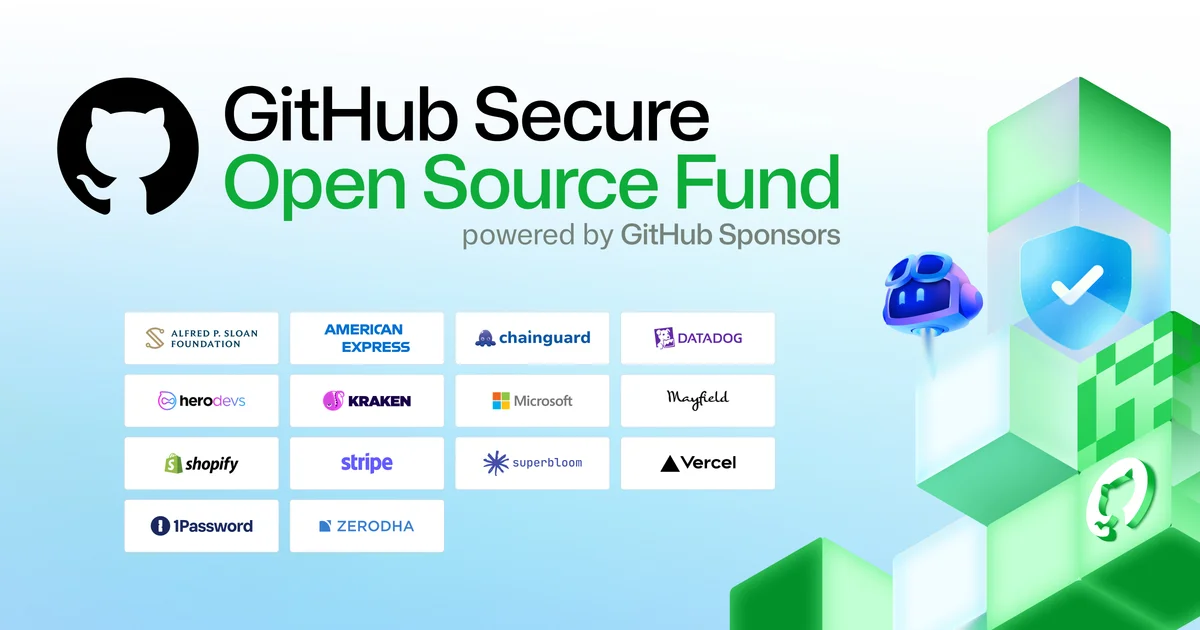
In Session 4 of the GitHub Secure Open Source Fund, over 50 projects received more than $500,000 in funding. This program paired project maintainers with GitHub Security Lab experts, security tools, and peer communities. The goal was to enhance security postures by integrating AI-assisted workflows for tasks like vulnerability triage, threat modeling, and code review. Projects such as OpenClaw, GitHub’s fastest-growing open source project, utilized the program to develop incident response plans, expand their use of GitHub security tooling, and audit their workflows.

AI as a Force Multiplier for Maintainers

The core takeaway from the program is clear: AI acts as a powerful force multiplier for open source maintainers. Faced with an increasing volume of unfamiliar contributions and expanding attack surfaces, maintainers often operate with limited resources. AI tools can help them investigate potential threats and prioritize responses more efficiently. However, the projects emphasized that maintainers still provide the essential context, judgment, and accountability needed to determine what code is safe to ship.

StartupHub.ai data indicates that developer tools, a category encompassing many of these open source projects, currently score a mere 2/100 on our overall developer index. This highlights a significant area for improvement and underscores the importance of initiatives like GitHub's Secure Open Source Fund.

Tangible Security Improvements

Across the 50 participating projects, concrete security enhancements were achieved. Maintainers strengthened existing practices, prepared for emerging AI-related risks, and explored how tools like GitHub Copilot could assist in their security efforts. This proactive approach benefits not only individual projects but also the broader open source ecosystem, which underpins much of the modern digital infrastructure.

The program’s structure, a 12-month engagement including three-week sprints, focused on foundational open source security, threat modeling, secure coding, and AI security. Each project received $10,000 USD via GitHub Sponsors, along with access to security resources and Azure credits. This model directly links funding to verified security improvements, encouraging measurable outcomes.

Session 4 Focus Areas

Session 4 specifically targeted projects crucial to daily developer operations. These included AI, machine learning, and intelligent systems like LangChain and ONNX, which are foundational for modern AI workflows. Build systems and supply chain tools such as browserslist and golangci-lint were also included, influencing software testing, packaging, and release management. Core programming languages, runtimes, and foundational libraries like core-js and Pyodide formed another group, where security improvements have a wide downstream impact.

The program also supported developer tools and productivity platforms. This comprehensive approach ensures that security enhancements are integrated across different layers of the software development lifecycle. The GitHub Secure Open Source Fund has, across all its sessions, helped participating projects identify and disclose hundreds of new CVEs, perform thousands of Dependabot security updates, and resolve numerous exposed secrets. This demonstrates a significant positive impact on the security of widely used software.

© 2026 StartupHub.ai. All rights reserved. You may not republish this article in full without a license. Search engines and AI research tools may crawl and summarize for reference. Bulk reproduction or model training requires a license. See our terms.
Daniel Singer

Written by

Daniel Singer

Editor, StartupHub.ai

Daniel Singer is the editor of StartupHub.ai, a technology expert and thought leader on AI and its applications across sectors, from fintech and healthcare to developer tooling and consumer software. He writes and tests the tools covered here thoroughly and regularly, and built StartupHub.ai to give founders, operators and buyers a clearer read on what they are actually being sold.