


"Now when you code, you use an agent. You don't directly manipulate text in an IDE anymore. It's not just about tab. It's about the model writing code for you." This potent statement from Boris Cherny, creator of Anthropic's Claude Code, encapsulates the profound transformation underway in software development. It signals a fundamental shift in how engineers interact with code, moving beyond traditional methods to embrace intelligent, autonomous systems.
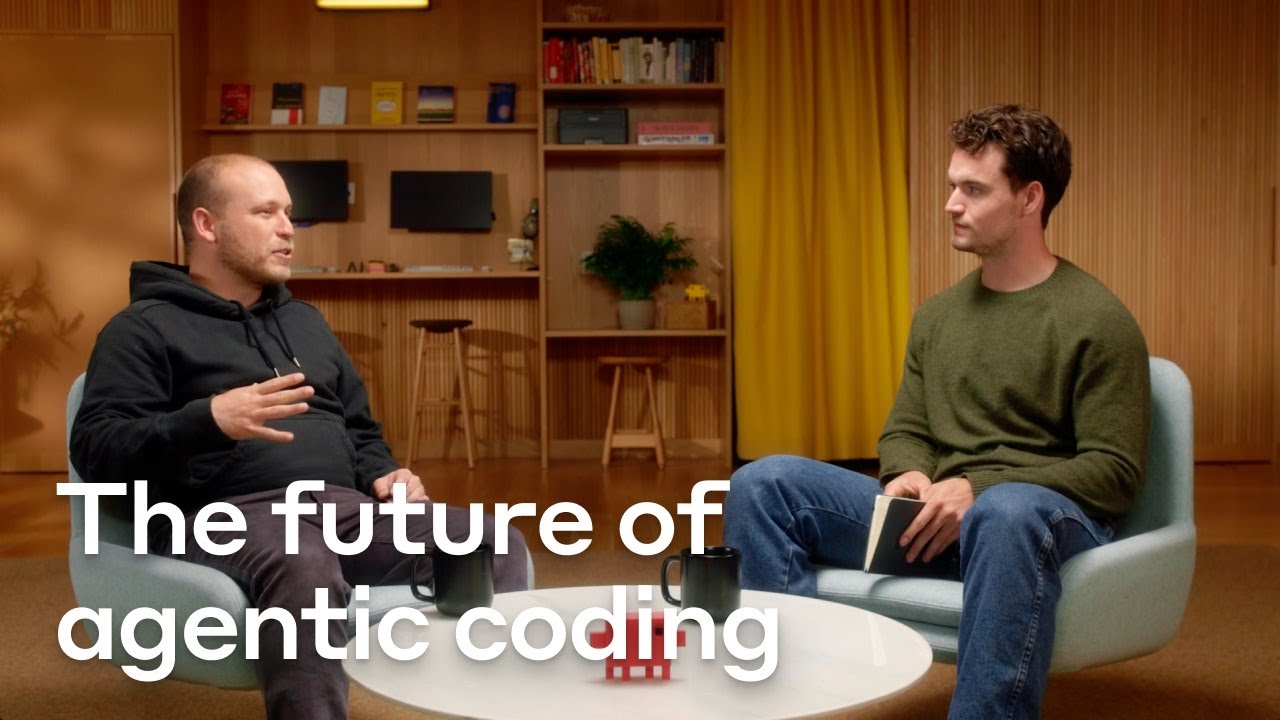
In a recent interview, Boris Cherny and Alex Albert of Anthropic discussed the current and future landscape of agentic coding, detailing the evolution of coding models, and emphasizing the "hackability" of Claude Code. Their conversation provided critical insights for founders, VCs, and AI professionals navigating this rapidly evolving domain.
The past year has witnessed a fundamental pivot in how AI assists developers. Cherny vividly recalls a time when AI in coding was limited to autocomplete and chat-based copy-pasting. That era, he asserts, is over. The advent of robust AI agents has shifted the paradigm from direct text manipulation to a hands-off approach, where developers instruct an agent, trusting it to execute complex code edits and even generate entire applications. This marks a significant leap, moving AI from a mere assistant to an integral part of the development workflow.
This revolutionary shift was not accidental. Cherny points out two critical factors that previously hindered AI in coding: insufficient model capability and inadequate "scaffolding" or "harnessing", the tools and context management built around the model. He likens this crucial interface to a "saddle" for a horse, without which the powerful model cannot be effectively steered. Over the past year, both the underlying models, like Claude 3.7 and 4.0, and the Claude Code harness itself have co-evolved, significantly improving their ability to perform agentic coding.
This continuous improvement is largely driven by an organic, internal feedback loop at Anthropic. "The Claude Code feedback channel internally is just a firehose," Cherny notes, highlighting the constant stream of insights from researchers and engineers who use Claude Code daily. This immediate, real-world application allows for rapid identification of model limitations and areas for harness improvement, fostering a unique co-evolutionary cycle. A core tenet of Claude Code's design is its hackability, leveraging `CLAUDE.md` files, MCP servers, and user-defined slash commands for extensive customization.


