Biotech's Innovation Crisis and the Invention Imperative

S
StartupHub.ai Staff
4 min read
Biotech's Innovation Crisis and the Invention Imperative

The escalating cost of drug development, epitomized by "Eroom's Law", Moore's Law in reverse, is strangling innovation within the biotech sector, creating a profound disconnect between scientific progress and market realities. Venture capitalists Elliot Hershberg and Lada Nuzhna, alongside a16z General Partner Jorge Conde, recently dissected this brutal truth, highlighting how the industry's structural challenges and an increasingly competitive global landscape demand a radical shift in approach.
Biotech's Innovation Crisis and the Invention Imperative - Video
YouTube Video

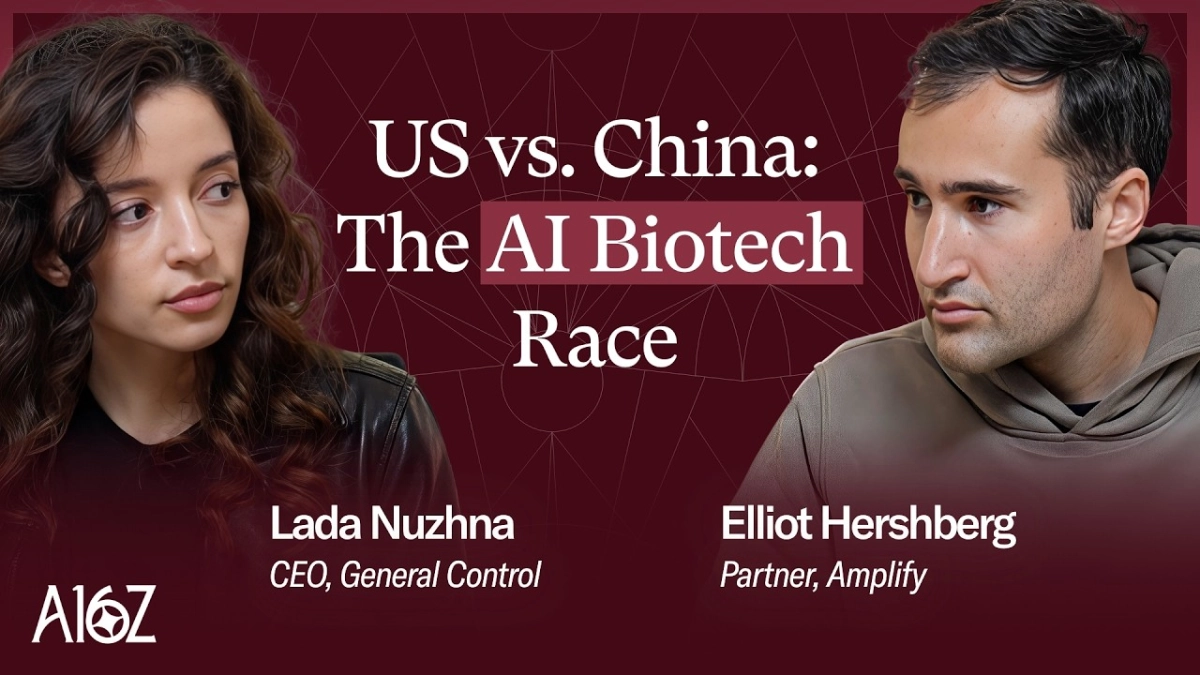
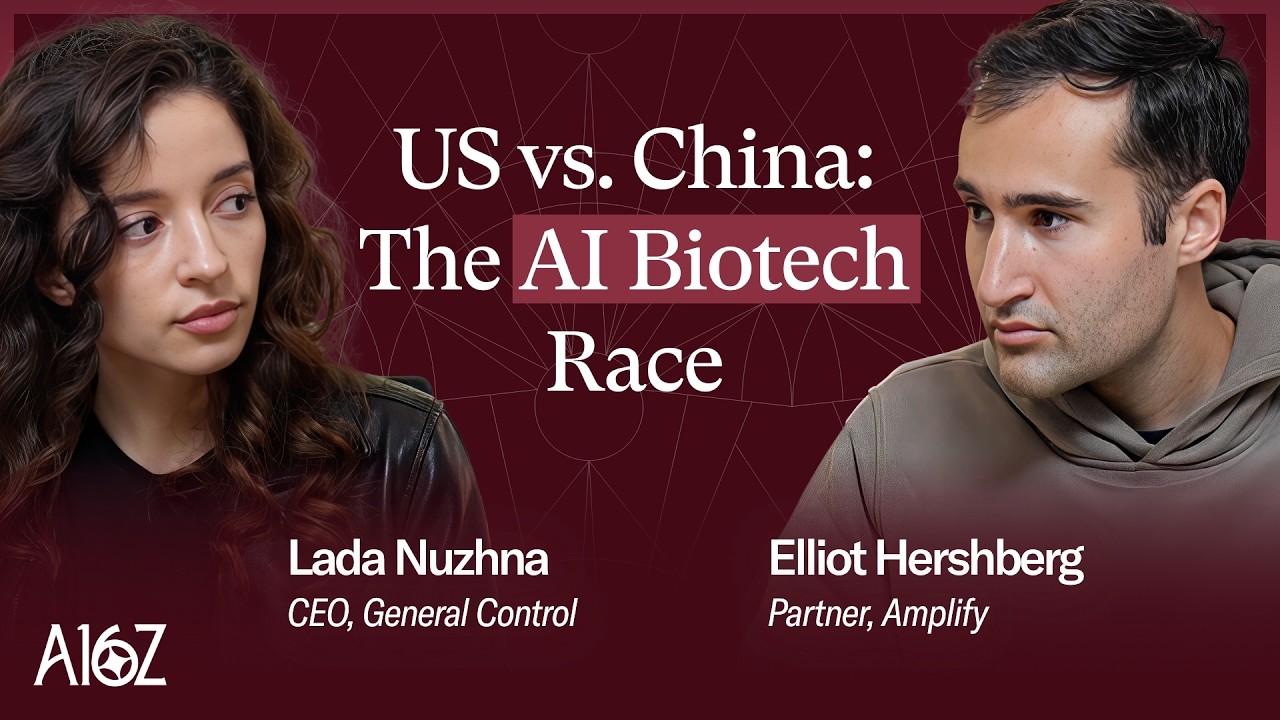
Jorge Conde, General Partner at a16z, interviewed Elliot Hershberg, a Partner at Amplify, and Lada Nuzhna, Founder of General Control, about the dire state of biotech. Their discussion centered on the exploding costs of drug development, China's aggressive competitive strategies, and the transformative, yet often misunderstood, role of artificial intelligence in drug discovery.

Lada Nuzhna starkly summarized the historical trend: "Since the birth of this industry, we only had increasing regulation over time." This relentless regulatory creep has driven the cost of bringing a single drug to market to an astronomical $2.5 billion, with the cost per patient in clinical trials soaring from $10,000 to $500,000. Elliot Hershberg emphasized, "There is no law of physics that requires it to be $500,000."

This economic reality has plunged much of the public biotech sector into an "EV-negative" state, where companies are valued below their cash balances. The investment ecosystem, once flush with capital, now faces a significant "logjam" from public markets down to early-stage funding. This downturn is particularly stark when contrasted with the COVID-era boom, which saw immense value creation and success, leaving many questioning the industry's long-term viability.

Compounding this domestic crisis is the emergence of China as a formidable competitor. Leveraging a less stringent regulatory environment, China can conduct clinical trials at a fraction of the cost and in mere weeks, a stark contrast to the years it takes in the West. Lada highlighted China's "implied approval" system for Investigational New Drug (IND) applications, where a filing is considered approved in 30 days unless a proactive hold is issued, a model that drastically accelerates timelines compared to the US's more cautious approach. This "geographic arbitrage" means that for established drug modalities, the US often cannot compete on speed or cost.


To overcome these structural impediments and the growing threat of foreign competition, the US biotech sector must embrace a new philosophy: invent what is currently impossible. This means moving beyond incremental improvements on existing technologies and focusing on truly novel modalities that demand tools and scientific understanding that do not yet exist. AI, while promising, currently plays a more significant role in preclinical discovery, accelerating target identification and lead optimization, but the bottlenecks remain in the costly and time-consuming clinical trial phases.

Elliot Hershberg distilled the geopolitical and innovation challenge into a potent observation: "China is an engineering state and America is a lawyer state." He argued that the US, with its foundational spirit of invention and world-leading research universities, must leverage its unique strengths in going from "zero to one." This involves identifying entirely new biological mechanisms and developing groundbreaking therapeutic approaches that are inherently difficult to replicate through mere efficiency gains. Such an approach shifts the risk profile, prioritizing scientific breakthroughs over market arbitrage.

However, the pursuit of these ambitious "net new" modalities comes with its own set of challenges. The regulatory framework, tailored for traditional drug development, struggles to adapt to unprecedented scientific advances. Furthermore, the commercial incentives for developing preventive or long-term care for widespread conditions like aging remain elusive within a healthcare system primarily designed to treat acute illness. Despite these hurdles, the industry's future hinges on its ability to push the boundaries of what is medically possible, fostering an environment where truly transformative medicines can emerge.

© 2025 StartupHub.ai. All rights reserved. You may not republish this article in full without a license. Search engines and AI research tools may crawl and summarize for reference. Bulk reproduction or model training requires a license. See our terms.
S

Written by

StartupHub.ai Staff

Editorial team

The staff writers of StartupHub.ai, ranging from investment analysts to avid AI tool users, early adopters and critical enthusiasts. Backgrounds span engineering, business and the arts. We hold every piece to rigorous standards of research and review.